Consistency is not a personality trait. It is a system, and systems can be built.
Last week was about identity: a promise, repeated. This week is about the harder question underneath it. Who does the repeating, once the company is bigger than you?
In the beginning, consistency is easy because there is only one of you. You write every post, answer every email, approve every sign. The brand is consistent because the brand is your taste, applied by hand, every day. Then the company grows. A second person writes the posts. A printer in another city makes the sign. A new manager answers the phone in his own way. Nothing was decided badly. It was simply never decided at all, so everyone decided for themselves.
That is the moment most brands quietly come apart. Not from a bad logo. From a hundred small, reasonable choices that nobody was asked to make the same way.
Mood is what you do when you are in the room
A brand that depends on the founder's mood works beautifully for as long as the founder is watching. The day she is travelling, or tired, or busy with the thing that pays the bills, the quality slips and nobody notices until a customer does.
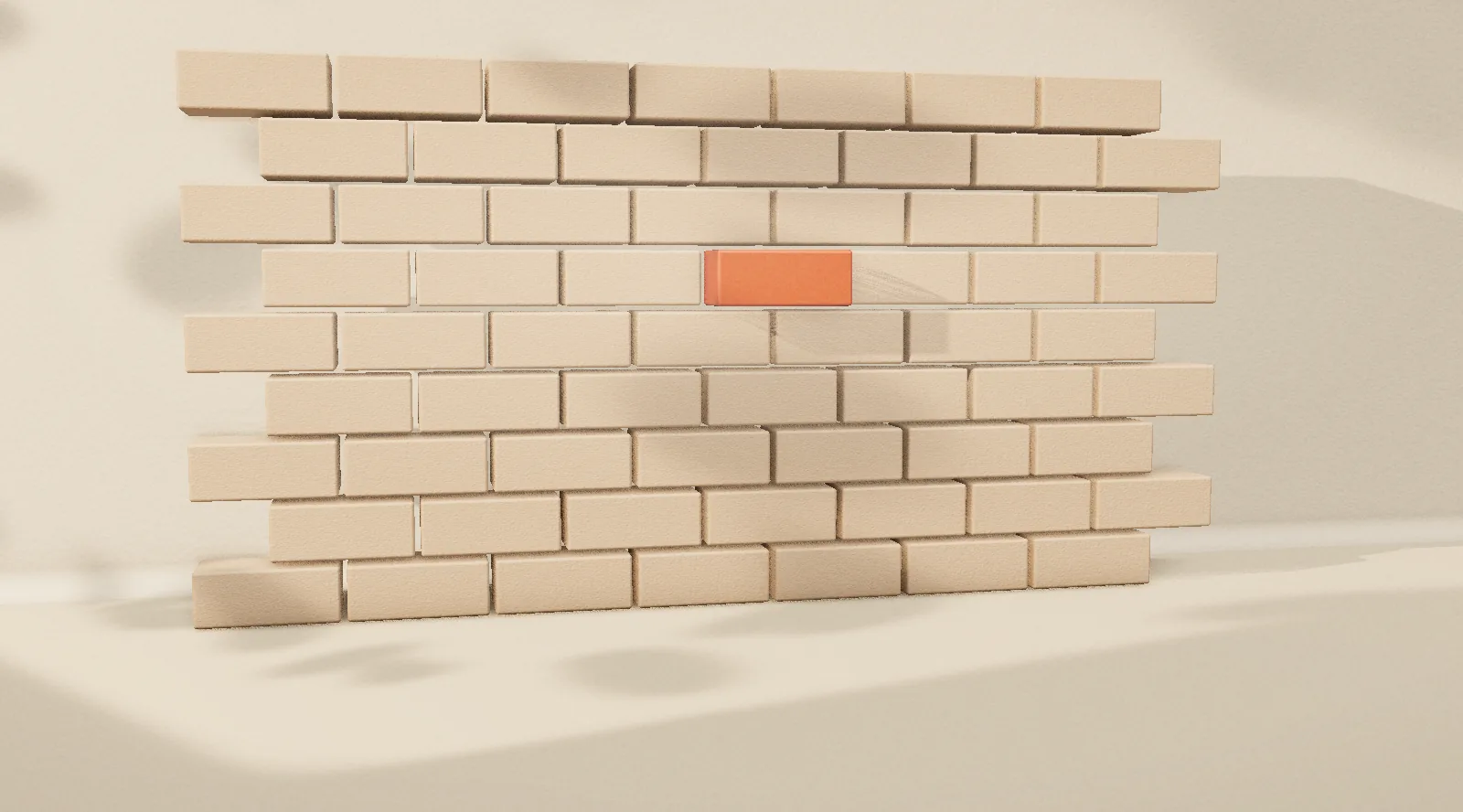
A system is the opposite. It is the set of decisions you made once, written down, so that the next person does not have to make them again. The bricks are the same so the wall can be anything. You can build a house or a courtyard or a tower with the same brick, and it will still look like one place. Make every brick by feel and even a short wall looks like three people built it.
Consistency, in other words, is not a quality of people. It is a quality of the rules they work inside.
Every step the same height
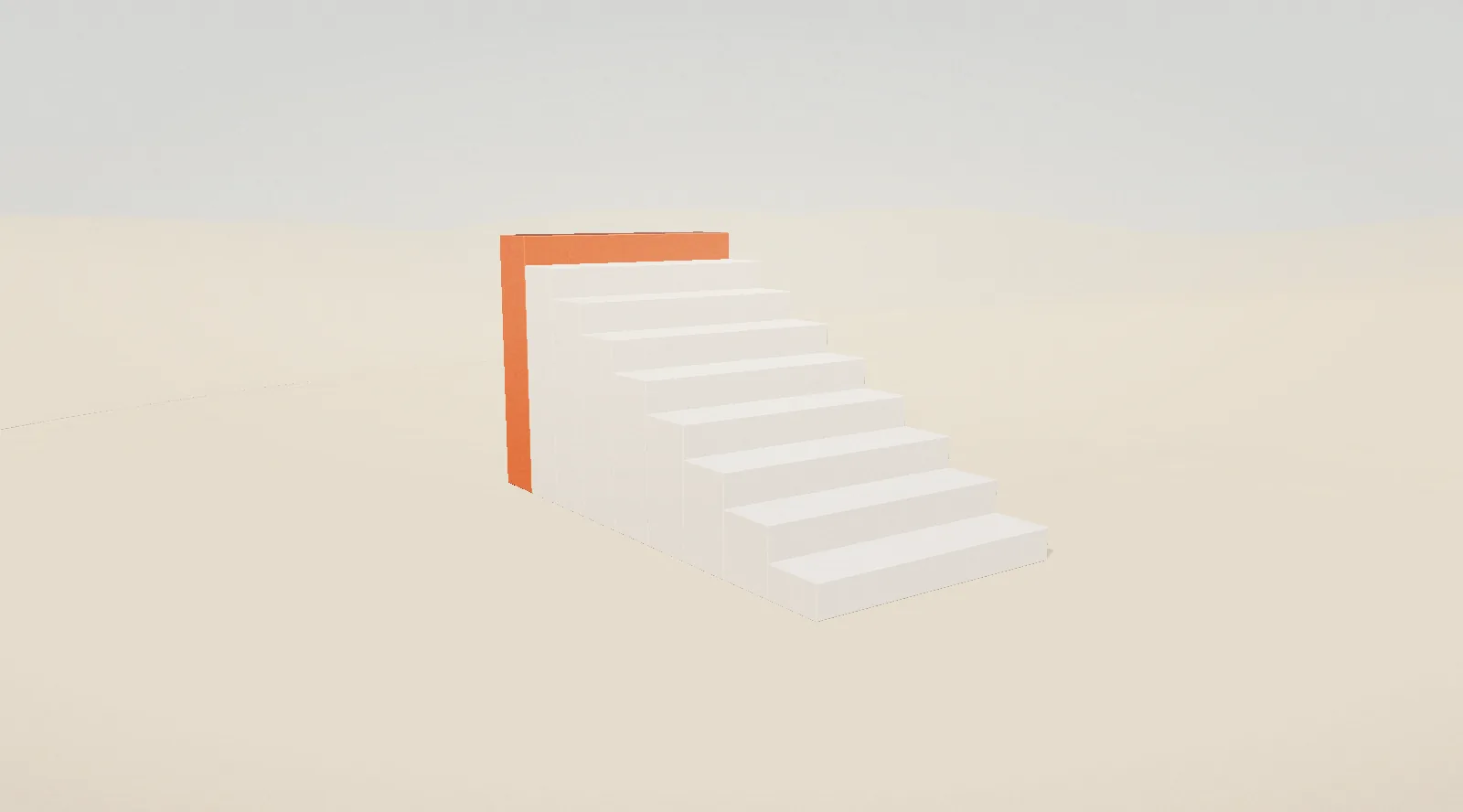
Think of a good staircase. Every step is the same height, so nobody has to look down. People walk up it while talking, carrying a box, thinking about something else. The stair does the thinking for them.
That is what a brand system does for your team and your customers. The template does the layout so the junior does not have to. The tone guide answers the question before the new hire asks it. The customer meets the same company on the website, in the shop and on the phone, and stops checking whether it is really you.
When a step is a different height, everyone trips, and everyone blames themselves. When your brand is a different height in every channel, your customers trip in exactly the same way. They do not think the brand is inconsistent. They think they must have the wrong company.
Rules do not limit creativity. Rework does
The usual objection is that rules kill creativity. In practice the opposite is true. A team with no rules spends its creative energy on the same decisions, over and over. Which blue. Which greeting. Which size of logo on which corner. Every piece of work starts from zero and gets corrected three times before it ships.
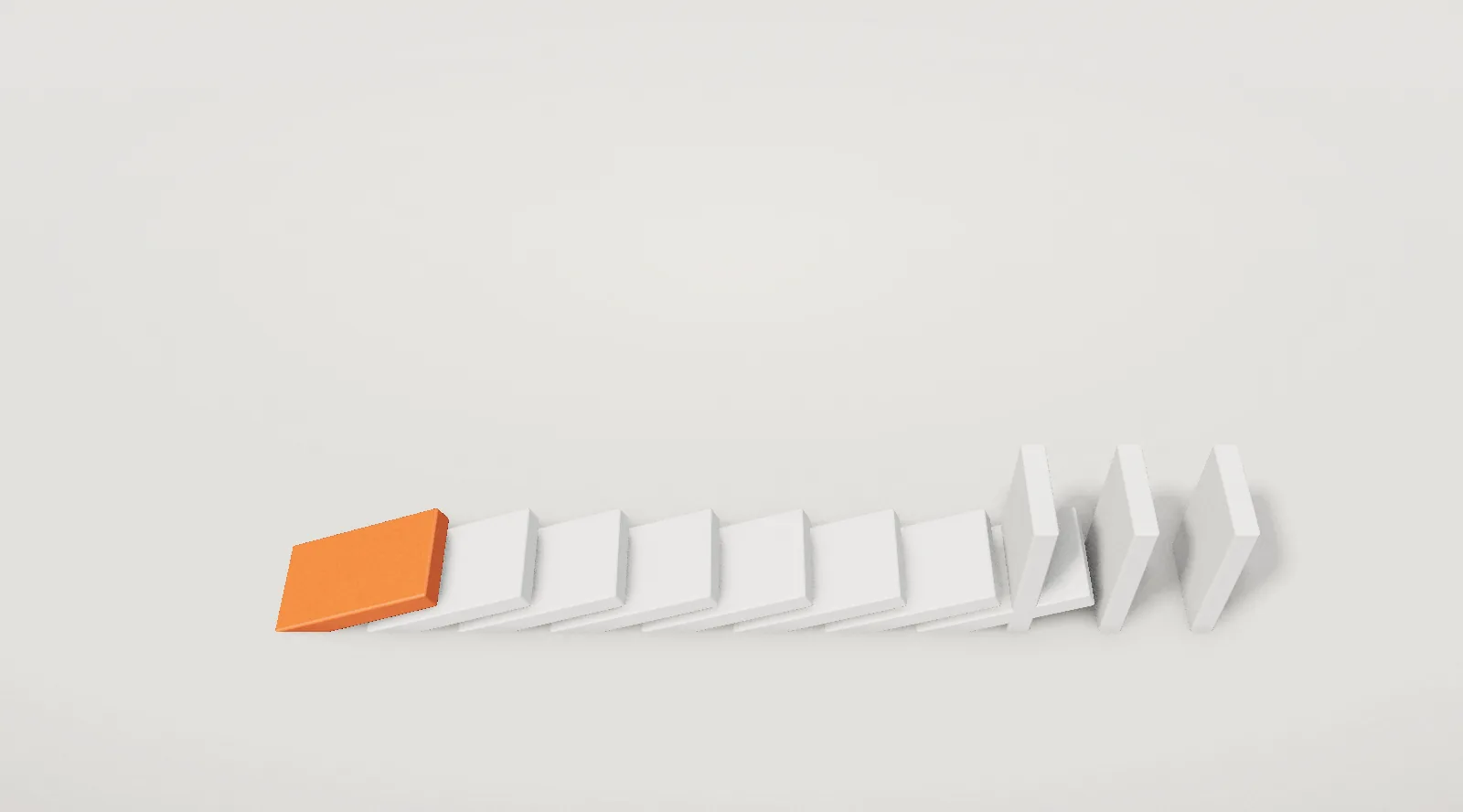
A team with clear rules spends that energy on the work itself. The first domino is decided; the rest fall on their own. The designer is free to be interesting inside a frame that is already right. The writer knows the voice and can spend the morning on the idea.
Constraint is not the enemy of good work. Endless small rework is. Most of what people call a creative bottleneck is really a decision bottleneck, and decisions can be made once.
Build the template once

Here is where to start, and it is smaller than people expect.
- Write your rules on one page. One line each for colour, type and tone. Three examples of it done right. One name: who decides when something is unclear. If it needs a second page, it is not a rule yet.
- Pick the five things you make most. A post, a proposal, an invoice, a sign, a reply to a complaint. Design each one properly, once, with the rules applied. Then lock it.
- Check it every month. Put last month's work side by side. Anything that drifted gets pulled back. Anything that drifted and looked better becomes the new rule, on purpose, not by accident.
None of this needs an agency. It needs an afternoon, a decision about who decides, and the discipline to reuse what you built instead of starting fresh because fresh feels like effort.
The founder on holiday

There is a simple test of whether your brand runs on mood or on a system. Go away for two weeks. Do not check.
If the work that went out while you were gone looks like your company, you have a system. If it looks like a slightly different company each day, you have a job, and the brand is one of the things you do by hand.
A real system is the founder on holiday and nobody noticing. Not because the team does not need you, but because what you know has been written down and built into the tools, and the tools do not get tired.
What you tolerate becomes policy
Every exception you allow becomes the new rule. The one email sent in the wrong tone because it was late. The one flyer printed in the wrong orange because the printer was closing. The one time the logo went in the corner because it did not fit. Each one was small. Each one taught someone what the standard really is.
At ten people, that is a bad week. At a hundred, it is the brand. What you tolerate at ten becomes policy at a hundred, and no guideline document will undo what people learned by watching.
So decide early. Write it down. Build the template. Check it monthly. Then let the system do the repeating, so you can get on with the choosing.
Consistency is a system, not a mood. The good news is that systems can be built by anyone willing to make a decision once and keep it.